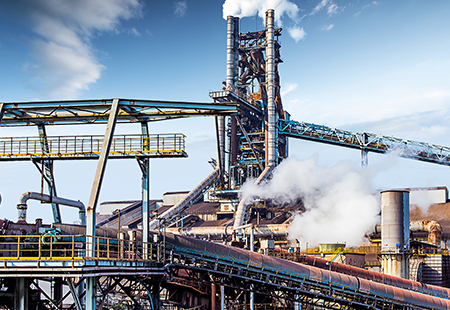


At the present stage, China's petrochemical industry generates solid waste and other emissions that impact the environment. During petroleum extraction, wastewater containing organic compounds and inorganic salts can have negative environmental effects. The composition of such wastewater is complex, and its discharge volume is considerable, making treatment particularly difficult. Not only does this offer little benefit for resource utilization, but it also adversely affects water quality. The production facilities in China's domestic petrochemical industry are generally complex, and the treatment systems vary accordingly. Therefore, during the production process, the combustion of fuels releases harmful gases, dust, and other pollutants generated from raw materials and processes, which are harmful to the environment. Additionally, much of the petrochemical production and processing generates waste such as sludge, white clay residue, and salt mud. Due to the large volumes of wastewater, waste gas, and solid waste discharged, treatment becomes quite challenging, leading to significant environmental pollution. This is a major issue in the environmental protection work of China's petrochemical industry at the current stage.
As highly efficient and highly selective catalysts, zeolites are widely used in the petroleum refining and petrochemical industries. In the early 1960s, the application of zeolite molecular sieve catalysts in the fluid catalytic cracking (FCC) process was regarded as a revolution in the FCC industry. In reactions such as catalytic cracking, hydrocracking, hydrogenation, catalytic reforming, isomerization, alkylation, and polymerization, materials including Y-type zeolite, ZSM-5 zeolite, and Beta zeolite serve as the catalytically active centers and play a crucial role...